Thursday, October 1, 2009

Agriculture -- Inside Out

Everyone is connected to agriculture from the food they eat to the clothes they wear. But, it is not uncommon to see facts about agriculture misconstrued in the world around us. It is important to separate fact from fiction and one of the best ways to do that is by experiencing agriculture first-hand.

The International Business Immersion Program (IBIP) enabled me to experience areas of agriculture that were completely new to me and even offered a few surprises in familiar parts of the industry.

Waterhof Dairy Farm in Gasbeek, Belgium, is a small, family farm, but it is not your typical dairy--it utilizes robotic milking! The computer in the robot monitors which cow is being milked, how much milk she produces, and even tests the milk for impurities or infections.

It was incredible to see such advanced technology at work on a small dairy farm. If there is an issue with the milk, the robot texts (texts!) the farmer to check that particular cow and then reroutes her milk to an alternative tank that stores milk not to be used for human consumption.

The owner of Waterhof said the robot is a great investment for his farm’s size. Many consumers believe modern technology is only implemented in large livestock farms, but the truth is modernized production facilities and practices have become the norm--from farms with thousands of animals to farms with under 100 animals. Our visit to Waterhof solidified the fact that small-scale, family farming and technological advancement can go hand-in-hand. It also reinforced the necessity for farmers to share their facilities and production practices with consumers to build knowledge and trust between the two end points of our food supply chain.

Tuesday, August 18, 2009

Teaming Up for the Farmer

Sitting in my cube, watching news about the Monsanto-BASF discovery of a drought tolerant gene in corn plants sweep like wildfire from the official news release, to numerous global media outlets, to all my “tweeps” on Twitter, was a full circle moment. Just over a month ago, I was at BASF World Headquarters in Ludwigshafen, Germany, with a group of fellow University of Illinois students learning about the collaboration between Monsanto and BASF; and now, their combined research efforts have resulted in a discovery that made it half way around the world to meet me in St. Louis. If that’s not proof of globalization in agriculture, I don’t know what is!

According to John Goette, Trait Licensing Lead for Global Agreements at Monsanto, the partnership between Monsanto and BASF began in March 2007 because both companies shared a common interest in improving the probability of success for the development of yield and stress traits. “The goal of the collaboration,” Goette said, “is find and develop the proverbial needle in the haystack.” Through the partnership, significantly greater resources are going in to the discovery effort -- including people, time, financial investment and experience. With more, higher quality resources, both companies have stronger odds of achieving quality results, ultimately finding that one gene out of 50,000 in the corn genome that could help drive the commitment to sustainable yield.

During my visit to BASF, value chain manager Andrew Beadle spoke highly of Monsanto. “It’s great to work with a leader in agriculture,” he said. “Monsanto has a strong position in this industry and does its job very well.” While BASF specializes in the identification of specific traits, the company admires Monsanto for its germplasm and experience in commercializing products. On the Monsanto side, Goette spoke of the partnership as “a match made in heaven.” According to Goette, together, the ag companies possess great synergy and they plan to utilize it to benefit their top priority -- the farmer.

It was fascinating to witness similar challenges and goals in two different ag companies from two different parts of the world. I was impressed by the level of communication and collaboration between Monsanto and BASF. According to Goette, both companies put a lot of time and thought into the terms of the collaboration and continue to interpret new challenges as a team. The investment is split 50/50 and both companies share recognition for yield and stress traits, regardless of who discovers the gene. From Ludwigshafen to St. Louis, it’s great to see the benefits of globalization at work in the agriculture industry. Congratulations to everyone from both companies who played a role in the first gene discovery of the collaboration between Monsanto and BASF.

Friday, August 7, 2009

From The Other Side

During the International Business Immersion Program (IBIP) trip, I was encouraged to look at the agriculture industry from many unique perspectives. While it’s not always easy to assume these unfamiliar angles, it is required if we, in agriculture, want to improve how we communicate with consumers. One of these experiences took place at Club De Warande, a Flemish business club in Brussels. One presentation that grabbed my attention was by Greenpeace representative, Marta Vetier.

While the name Greenpeace has historically ruffled some feathers with groups passionate about agriculture, representatives of NGOs must be listened to and understood. Although I take a pro-GMO stance, I was impressed by Marta. I learned that Greenpeace representatives undergo extensive training to remain peaceful, despite conflict and they practice non-violent, creative confrontation. Marta exemplified this demeanor through her entire presentation. Furthermore, she was honest and used hard facts to back up what she was saying. When challenged to discuss human threats presented by GMOs, she set her agenda aside and respectfully said there is no existing scientific evidence that GMOs have or will cause human health issues. It was nice to hear the truth from an NGO that has “zero tolerance” for GMOs. Marta also shared that the EU human food chain is GMO free and 30 GMOs have been authorized as imports for feed and industrial use only.

Marta’s presentation opened my eyes to how Greenpeace supporters and many Europeans view GMOs. By understanding their perspective and objectives, the agriculture industry can focus on communicating specific messages and ultimately come to a fair solution between the two parties. According to the Greenpeace website, the NGO has three demands in regards to the introduction of GMOs in Europe.
· The GM risk assessment process is strengthened, to meet the existing EU legal requirements. This means taking all scientific evidence for the long-term effects of GM products for health and the environment as well as the socio-economic impacts into account.
· The European Food Safety Authority (EFSA) is reformed by giving it the necessary scientific expertise to carry out complex environmental and health risk assessments.
· GM contamination of seeds is prevented, to allow the survival of conventional and organic agriculture.
· Each member state retains control over its national territory and decides on the use of its land by establishing GMO-free areas.

I appreciated the approach Marta used in talking about the emotional issues of food and health. She was open to listening what we had to say and engaged in a dialogue to discuss both sides of the issue. Based on Marta’s presentation, I believe concerned consumers simply have a fear of the unknown. Communication and education are imperative to finding a common solution. The key point I took away from this presentation is that there are intelligent, poised, well-educated people out there speaking out against agricultural progress. It is crucial for people involved with the modern agriculture industry to share their own stories and perspectives with consumers. The reality is, we are all consumers and we all want a safe, high-quality, affordable food supply, but the first step to compromise is listening to each other’s concerns and looking at the issues from the other side.

Monday, July 27, 2009

Farm Girl Goes Global

As a new intern at Monsanto, I have enjoyed meeting and working with people who share my passion for agriculture.

I grew up on five acres of rich, black, Central Illinois soil, where you can see corn and soybeans stretch to the horizon. Our large, family-owned pork farm sits just a half mile up the road from our house, where my dad manages a 7,000-head operation with seven employees. In high school and during holidays home from college, I worked at the farm and helped care for the sows and newborn piglets, and kept breeding and genetics records. During this time, my dad was instrumental in teaching me about agriculture production and practices. And I became fascinated with the business.

Since we already had 7,000 pigs to work with and learn about, my little sister and I decided to show market lambs through 4-H, to diversify our livestock experience. Each winter, we traveled with Dad to pick out our show lambs. We worked through the spring to train them, and develop a nutrition and exercise program. During the summer and fall, we traveled around the state showing our lambs. This experience reinforced hard work, responsibility, persistence and gave us many, wonderful family memories. After 10 years of showing, our hard work paid off when my sister, Lynsie, won Grand Champion Market Lamb at the Illinois State Fair!

In high school, I was active in FFA and took every opportunity to speak competitively about agriculture issues like concentrated animal feeding operations (CAFOs) and genetically-modified organisms (GMOs).

My mom was also an incredible asset to my understanding of agribusiness. As the director of commercial/agribusiness at a national insurance company, she taught me the importance of networking, strong writing and public speaking skills, and being well-read on agriculture topics. All of these experiences played into my passion for the agriculture industry.

In 2006, my life-long dream of attending the University of Illinois became a reality. I chose to major in agricultural communications with the aspiration of redefining agriculture. I want to help consumers understand the scope of the industry and create a proactive view of agriculture through marketing, communications and public relations.

Prior to beginning my internship with Monsanto, I spent two weeks overseas gaining a European perspective of agribusiness and the supply chain through the International Business Immersion Program (IBIP). This Monsanto-sponsored program was designed to give the top students in agriculture and business at the University of Illinois an opportunity to explore globalization of the agriculture and food industry--both in the classroom and through an international experience. I chose to apply for IBIP because I wanted to develop a more well-rounded understanding of the agriculture industry. I wanted to challenge myself to read case studies and to learn about ag policy and international trade.

This spring, I spent time each week learning about the European Union, ag policy and globalization of the agriculture industry from our professor and a variety of guest lecturers. In addition to class time, we visited Monsanto and Bunge in St. Louis, ADM in Decatur and the SUPERVALU distribution center in Urbana. The Saturday following finals week, 25 students and I packed our bags and boarded a bus to Chicago, Illinois. Seventeen hours, two flights, two bus rides and one walk up a winding cobblestone street later, we arrived at our first destination in Leuven, Belgium.

After two weeks of traveling, visiting ag companies and networking with incredible people, I can tell you that IBIP was the experience of a lifetime. The program enhanced my academic development through interactions in a foreign environment with an array of professionals from unique agriculture sectors. And the definition of agriculture is not limited to farming. We visited diverse farms, production facilities, corporate offices, NGOs, retailers and restaurants--all directly related to agriculture.

IBIP has helped to mold my definition of agriculture through diverse perspectives and global experiences. Over the next several weeks, I will have a series of blog posts featuring some of the highlights and surprises from my trip, leading up to my take-away messages, including how IBIP provided clarity and direction for my career goals in agricultural communications. Stay tuned!

Friday, July 24, 2009

Doughnuts and Discovery with Hugh Grant

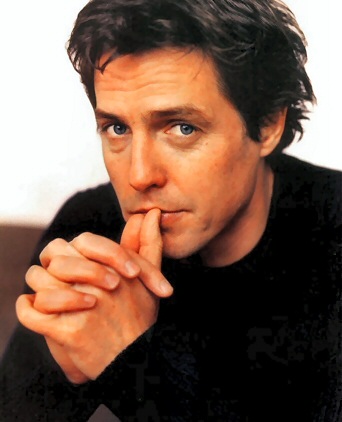
When I told my friends about Doughnuts and Discovery with Hugh Grant, the response was more enthusiastic than I had anticipated. Then I realized they were thinking of Hugh Grant, the British actor from popular films like Love Actually, Two Weeks Notice and Bridget Jones's Diary. I laughed and quickly explained the Hugh Grant I was referring to is the Chairman, President and CEO of the multi-national agricultural company , Monsanto. But the more I thought about it, Hugh Grant the actor and Hugh Grant the CEO of Monsanto are not as different as people might think.

Both Hughs were born and raised across the pond. Hugh Grant, CEO of Monsanto was born and raised in Scotland and still charms audiences with his native accent today. Both Hughs are very humble and downplay their celebrity statuses. When Hugh Grant (CEO) walked into the auditorium to speak to Monsanto Interns and Co-ops during Doughnuts and Discovery, everyone in the room went silent. Hugh walked to a seat at the front of the auditorium, sat down, chuckled and playfully said, "why did everyone get so quiet?" As he introduced himself, Hugh laughed as he talked about his summer "internships" selling wallpaper and cutting lettuce back in Scotland.

As Hugh (CEO) began talking to our group of eager, young professionals, it became apparent that he has a great deal of charisma and wit, just as actor Hugh Grant demonstrates in his films. But the Monsanto CEO does not earn the respect of 23,233 employees worldwide on personality alone. Hugh (CEO) has a B.S. degree in Molecular Biology and Agricultural Zoology from Glasgow University, a M.S. degree from Edinburgh University and a MBA degree from the International Management Center in Buckingham, U.K. Hugh's (CEO) education and international experiences have provided him with a great deal of knowledge and perspective.

Hugh (CEO) challenged our group to utilize our internships to shape our personal opinions about Monsanto. He also shared the reason he was attracted to a career in agriculture was because of its relevance in food production. Hugh (CEO) encouraged us to think about agriculture from a long-term perspective. He said, "Demand for food will more than double in 20 years -- how are we in agriculture going to meet that demand?" After answering several questions about Monsanto's business, Hugh (CEO) concluded with a few thoughts on prioritization and choosing a career path.

"Priorities shift over time," Hugh said, "The most important thing you can do it stay flexible or you will get crushed by your calendar."

As far as choosing a career -- Hugh said, "You shouldn't be doing something you dread waking up for."

Through my time here at Monsanto, I've had the opportunity to listen to Hugh (CEO) on a few different occasions. He is always humble, knowledgeable, humorous and charismatic. I've noticed that people are drawn to him, like they are drawn to an actor or celebrity. From what I've seen, Hugh (CEO) does a fabulous job of providing leadership and vision for Monsanto. It is incredible to see everyone at a company, from the CEO to the interns, have a passion for agriculture and a belief in what they do on a daily basis.

Tuesday, June 30, 2009

How Tweet!

When I began my internship at Monsanto, I knew little about the social networking site Twitter and I was skeptical about the benefits of using it. After one month of using the site, I have come to appreciate its simplicity and value the opportunity to connect with people in agriculture around the world. Twitter has enabled me to network with everyone from a California dairy farmer, to state Farm Bureau presidents, to other ag interns and even agriculture and food activists. I invited Monsanto's resident Twitter expert to guest blog about how to use this phenomenal resource. I hope you all take the opportunity to explore Twitter -- it tears down walls between agriculture leaders, young and old, with unique interests and missions. It is also a great way to discover what is happening in the industry from moment to moment. Please comment on this post if you have any questions -- good luck getting started!


HOW TO USE TWITTER

By: The Monsanto Twitter Expert


Twitter is a site that was developed over 3 years ago as a way for friend to connect and notify each other of what they were doing. Via computer, blackberry or texting, friends could send updates to Twitter and other friends would be updated instantly through the same tools.

Since then, it has evolved into a site for millions of people to connect (most of who have not met in person before) and promote and update each other on news stories, life stories, or anything that they may find interesting. “Tweeps” (people who use twitter) have congregated and formed communities of individuals from all around the world who share in the same interests as them.

As a member of the Twitter community, you have your own profile page that houses your icon (usually a photo of yourself) and all twitter updates. Twitter also gives you the option of changing your background and personalizing the page to fit your own tastes. On a separate page, that comes up when you log in, you have a newsfeed of tweets(updates) that come from the people you choose to follow (another term for connecting).

Any update made on the site must be kept to 140 characters, so creativity is key! Aside from text updates, you can also provide photos and websites via TwitPic and URL shortening websites like bit.ly and tinyurl.

Twitter …
- Can be noisy, many different conversations going on
- Has very little substance and moves very quickly
- Depending on the amount of people you choose to follow, checking the site can be addicting!

Twitter is useful for…
- Finding like-minded individuals/groups
- Relationship building
- Building a personal or corporate brand
- Confirming current opinions/interests
- Finding out what people are talking about right now on a particular topic

Guidelines:

1) Anything you may tweet, while it can be deleted from your page, is not deleted from search results or different twitter apps such as Tweetdeck. Think twice before you make any statements you think may be controversial.

2) Put up a picture, it makes your account seem more professional and humanizes you as well.

3) Be respectful of others. If someone misconstrues your tone, they may report you to Twitter and you may be kicked off.

4) Engage with other people! @replying and retweeting builds relationships and your following.

Quick Tips:

How can I personalize my page?
Go to the settings tab on the top right corner. There you can add a quick bio about yourself, where you are located, etc. You can also change your background and add a picture icon instead of having the boring blue and brown one! Having a unique icon also gives you more credibility and allows people to feel like they can relate to you.

What does it mean when someone tweets and has the @symbol and someone’s name?
That’s an @reply or mention. This shows that the twitter user responded to what someone said, or is addressing them. You can check to see if anyone @reply’ed you by going to the right hand column and clicking the @ tab right under home.

What does RT @ (username) mean?
This is called a re-tweet, which is a way to forward on what the person said. You can simply cut and paste what someone else said to forward on to your readers.

What is a tiny url?
These are shortened web addresses that people will tweet in lieu of posting a whole web address, due to the nature of twitter and lack of characters you can use. This website gives you space and freedom to write what you want and still put a website address in. The same goes for urls such as “bit.ly”. http://www.tinyurl.com/

With Twitter, it is important to have fun, meet new people, and share what you are passionate about.

Thursday, June 25, 2009

Impacting the Future of Agriculture

"National 4-H Council has received a $1.5 million award from the Monsanto Company to drive the expansion of the National 4-H Volunteer Initiative," according to a press release from the National 4-H Council. "The new grant will fuel the expansion of vital volunteer training programs and fund the development of new volunteer recruitment and retention strategies." "Generous partners like Monsanto continue to make it possible for 4-H to thrive in today's economy and to continue building our extensive network of well-trained volunteers, ensuring that our nations's youth have the positive mentoring, guidance and hands-on learning they need to become future workforce leaders and active citizens," said Donald T. Floyd, Jr., National 4-H Council president and CEO.

As a 10-year 4-H member in McLean County, Illinois, I am thrilled to see a company like Monsanto making investments in human capital for the future of the agriculture industry. 4-H does a fantastic job preparing youth with vital life skills including: leadership, persistence, responsibility, service and strong work ethic. Through 4-H, my sister and I showed market lambs, took on leadership roles, practiced public speaking, learned about agriculture and discovered our talents.


Purchasing, raising and showing lambs taught me responsibility, persistence and hard work. On summer evenings we would spend time in the barn, as a family, working with the lambs, cleaning pens and feeding. Over the years, we grew, as did our skill and knowledge. After 10 years of hard work, my sister Lynsie received Grand Champion Market Lamb at the Illinois State Fair. It's difficult to explain the emotion -- but it was truly a family victory. There was a lot of hugging, tears and excitement from family, friends and even competitors. But the stories we reminisce on today, are about challenges we overcame and how far we progressed over the years.

While 4-H provided many wonderful, family memories and life lessons, it also guided me to where I am today. I began public speaking as an eight-year-old 4-Her. Over the years, I wrote different styles of speeches and delivered them on the county and state levels, but most importantly, I gained feedback to improve my ability in the process. In high school, I became active in FFA public speaking and addressed key agriculture issues like pork production practices and biotechnology. Through learning about ag issues and speaking about them, I found my passion for agricultural communications and pursued that major at the University of Illinois. Just this spring, I volunteered as a judge for the Champaign County 4-H public speaking competition. It was incredible to go back to the beginning and guide and encourage the new 4-Hers, just as others did for me. I realized how far I have come in 12 years -- it all started in 4-H.

I am proud to be interning with a company like Monsanto that values investing in the development of youth who will, one day, lead our imperative and dynamic agriculture industry.

Wednesday, June 17, 2009

5:00a.m? Yes we CAN!!!

After a wonderful evening at Busch Stadium, Whittney and I crawled out of bed at 5:00a.m. to volunteer with the United Way FoodShare Food Drive -- what a rewarding experience! We were stationed on the Monsanto Creve Coeur campus along with other teams of interns and United Way representatives. Wearing our flourescent safety vests, we collected food for the St. Louis Area FoodBank to help local people who are hurting during this economic recession. The Monsanto employees who donated were really friendly and made our morning! We enjoyed visiting, a lot of laughs, some doughnuts and collected three large barrels full of food in the process. After volunteering, we decided to take our community service to the next level. We visited Schnucks after work and both bought a bag full of food to donate tomorrow morning. I encourage everyone who reads this post to volunteer in their community. If you are already involved with volunteer projects, I would love you know what you are up to!

Collecting food -- together we can!

So... maybe baseball is cool afterall!

Family, friends, agriculture, photography and water skiing are just a few of my favorite things... baseball, is not. That is -- until the Cardinals game last night! WOW! What an awesome night! My new roommate, Whittney, and I were treated to an evening in the Monsanto luxury suite with some of the public affairs team; and if that wasn't enough, the Cardinals beat the Tigers 11-1! Talk about an exciting baseball game -- I'm a fan! Thank you to Monsanto for inviting us to watch one of the best games EVER, while enjoying a ballpark hot dog in the most perfect seats, directly behind home plate. Here are some photos from our baseball experience of a lifetime!

Me and my new buddy, Whittney, with our Cardinals vs. Tigers tickets!

Busch Stadium at dusk.

What a view!!!

Thursday, June 11, 2009

Greetings from Creve Coeur!

Whew! I've been interning at Monsanto Company for almost two weeks now and time has just flewn by... probably because I'm having a great time! First of all, anyone who is offered the opportunity to work for Monsanto -- take it! This company is full of incredible, genuine people with diverse backgrounds and talents. There are also an endless number of resources available to learn about the agriculture industry. In the short time I've been here, the experiences I've had and the knowledge I've gained as a result of those experiences, is priceless. I am loving my full-time job as a sponge!


My first two weeks here, I had the opportunity to visit with Monsanto employees in a variety of areas across the company, from public affairs to U.S. commercial. Everyone I met had a unique story that led them to where they are today. Many of them had moved through numerous areas within Monsanto to learn different aspects of the business. Enthusiasm, agility, initiative and compassion were common qualities from person to person.


Joining the public affairs team has been a very humbling experience. It reminded me of my transition from high school to college. As a senior in high school, I felt confident in my abilities and was ready to shine when I got to the University of Illinois. When I arrived at college, I realized everyone else was just as driven and skilled as I was, if not more, and I quickly began working to set myself apart. When I arrived at Monsanto, I was immediately humbled. I have so much to learn from the people who work here and I'm enjoying every minute of it!


This summer will challenge me to diversify my skill set. I have been assigned a variety of projects. I will be creating content and communication tools for a section of Monsanto.com about plant breeding. I will be writing a number of articles and blog posts for the internal communications division of public affairs. I will have the opportunity to work with international website strategists to review content on Monsanto global websites for Mexico, Brazil, Canada, South Africa and Australia. I will also get to dabble in the issues management side of public affairs. As I begin working on my projects, I am reminded of the enthusiasm in the people I met with my first week here and I can't help but feel the same way.


NOTE on the image: The public affairs team is a fun group of people and everyone has created their very own South Park character that reflects their personality and interests -- I have a wide range of interests, but this one is my "I LOVE Ag" Alyssa! (To see everyone else's characters visit Monsanto According to Monsanto and click on About the Bloggers.)

Monday, June 8, 2009

On the MOVE...

Hello all! In the last month I've wrapped up my junior year at the University of Illinois, traveled to Europe for the International Business Immersion Program (IBIP), moved to St. Louis, MO and began working as an intern for Monsanto Public Affairs. To learn more about our European experiences through IBIP, visit the student blog which was updated daily during our trip. Check back soon for updates on my time at Monsanto.

Wednesday, April 29, 2009

Set for SUMMER!

The redbuds are in full bloom on campus and summer is just around the corner. I can tell already... this summer is going to be FULL and fantastic! I was recently invited to join Monsanto's Public Affairs team as an intern in St. Louis, MO. This internship will give me the opportunity to dabble in executive communications, media communications as well as issues, employee and electronic communications. I am excited to work with Monsanto's world-class team and to develop top notch skills for my future career. I would love to know what the other Ag communicators out there have planned for this summer -- feel free to comment on this post or shoot me an email!

Prior to my internship with Monsanto, I will have the opportunity to visit Belgium, France, Germany and the Netherlands through the International Business Immersion Program. This experience abroad lasts for two weeks at the end of May and will give my classmates and I an opportunity to see the globalization of the agriculture industry first hand. As a part of my European travels, I will be required to keep a blog -- so keep an eye open for a post guiding you to a new blog with tidbits about my adventure overseas!

Well, that's my summer in a nutshell! Not to mention a few weddings -- CONGRATULATIONS to fellow Ag communications student Karlie Elliott and her fiance Andrew Bowman on their up coming wedding! One more bit to add about getting closer to the real world -- I am getting ready to purchase my first car! EXCITING stuff! Keep me posted on your activities too!

Wednesday, March 11, 2009

Discover Your Quest at ExplorACES 2009!

DIG INTO over 100 interactive exhibits, such as...
  • Propagate your own plant with Horticulture Club
  • Learn how food go from a raw product to the supermarket shelf
  • Milk a cow with the Dairy Club and see a fistulated cow--that's a cow with a viewing hole in its stomach
  • And much more!
NAVIGATE around campus and experience interactive exhibits while meeting with U of I faculty and students.

UNCOVER housing options, scholarship opportunities and the diversity of the College of ACES.

JOURNEY your way to exciting study abroad and leadership opportunities. Travel off the beaten path and venture into a world of possibilities with ACES student organizations.

UNMASK the possibilities that await you at the College of ACES!

VISIT ExplorACES on